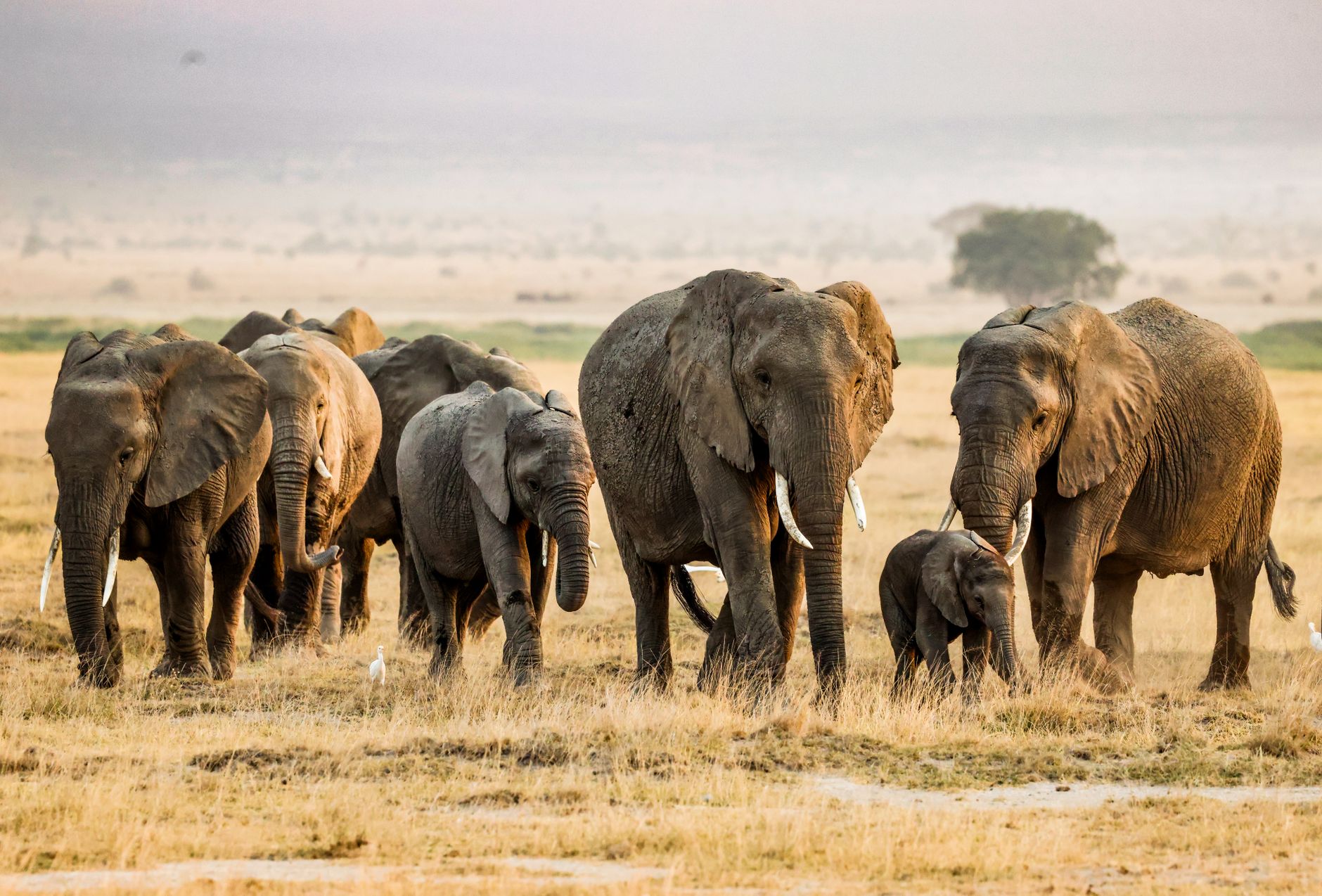
You have probably rehearsed the moment before the trip even begins: amboseli safari what if elephant blocks road. The honest answer is reassuring: you do very little, and your guide does almost everything. Elephants treat roads as paths, and Amboseli is full of roads. When a bull steps onto the track ahead, the next few minutes depend on the guide, on park rules, and on how calm your family stays. Safari vehicle safety starts before the elephant appears: seat belts on, arms inside, voices low. By the time a huge grey shape steps into the road, your only job is to keep doing what you practiced.
Amboseli Safari: What If Elephant Blocks Road?
Stay seated, keep quiet, and follow the guide’s instructions when an elephant blocks the road. Do not honk, rev the engine, shout, feed the elephant, use flash, or ask the driver to squeeze past. The guide will maintain space, watch the animal, and decide whether waiting, reversing slowly, or rerouting is safest.
For families, the hardest part is usually keeping children calm. Explain before the drive that elephants have the right of way. A roadblock is not a problem to solve; it is part of the show. Give kids a job, such as watching ears or trunks, and remind them that a quiet vehicle is a safe vehicle. If a child starts to panic, talk calmly about the elephant’s size, tusks, or family group.
How Do Safari Guides Decide Whether to Wait, Reverse, or Reroute?
The guide assesses the elephant’s distance, direction, body language, herd position, and available escape route before moving. A calm elephant may be given time to cross or feed, while an approaching or agitated elephant requires more space and a slow retreat. In Amboseli, the driver must also remain on authorised tracks.
A guide sees the whole picture before deciding. If the elephant is a lone bull feeding beside the road, the driver may stop and wait. If a cow with calves is moving toward the track, the guide will create more space. In a private vehicle, you get more say in how long to stop and where to position for photos. That flexibility is part of whether a private safari vehicle is worth the cost, especially for families who like to linger.
How Long Can an Elephant Roadblock Delay a Game Drive?
An elephant roadblock may clear in a few minutes or last much longer if a herd is feeding, resting, or crossing. There is no dependable maximum waiting time because the animals control the schedule. Families should allow flexibility in game-drive plans, especially when a roadblock occurs near busy wildlife-viewing areas.
In the dry season, water is scarce, elephants gather around the swamps, and the viewing is dense. Amboseli’s dry-season wildlife and elephant viewing is a big reason families choose this park. It also means popular tracks can get busy, so a roadblock near a water hole may mean a longer pause. Build buffer time into your morning or afternoon drive so a delay does not wreck the rest of the day.
Elephant Body Language and Warning Signs Families Should Know
Most elephant roadblocks in Amboseli are calm. Elephants cross roads constantly, especially in the dry season. The risk grows when an elephant feels crowded, a vehicle gets too close, or the animal is surprised. That is why guides read the body before moving.
Learn the basics before you go. Ears held wide means the elephant is checking you. A raised or shaken head is a warning to back off. A sudden turn toward the vehicle can signal a possible charge. A trumpet or deep rumble is an audible warning. In every case, the family action is the same: stay seated, stay quiet, and wait for the guide. Teach children these signals before you leave the lodge so they know why the guide stops or reverses. A still elephant is not an invitation to stand up, lean out, or push for a closer photo.
What Rules Do Safari Vehicles Follow in Amboseli National Park?
Amboseli safari vehicles should stay on designated roads and tracks, avoid crowding or cutting off elephants, and give wildlife priority. Drivers must not honk, rev, shout, force a gap, or drive off-road to bypass a blockage. The guide may wait or turn back because protecting animals and passengers takes priority over the timetable.
Amboseli National Park rules are strict for a good reason. Off-road driving is not allowed, so a driver cannot loop around a herd. If an elephant stands in the road, the route is blocked unless the guide sees a wide, permitted way around. Kenya safari family safety starts with following these rules, even when the delay feels long. The elephant decides when the road opens.
Can Children Stay Safe When an Elephant Approaches a Safari Vehicle?
Elephants can be dangerous if pressured, surprised, or approached too closely, but professional guides reduce risk by maintaining distance and reading body language. Families should stay seated, quiet, and inside the vehicle while the guide manages the encounter and decides the safest response.
Children are safe in the same way adults are safe, as long as everyone follows the same rules. Keep a child’s head and arms inside the vehicle, especially in an open-top car. Do not let a child shout to get an elephant’s attention. If your child is nervous, sit them in the middle seat, away from the side where the animal stands. When you plan the trip, tell your operator you are travelling with children and ask about vehicle design and drive length. Our full Amboseli safari guide covers lodges, drive routes, and family-friendly planning.
Plan for the Roadblock Before You Reach Amboseli
On your first Amboseli morning, you will probably see an elephant before you see the road it blocks. That is a good thing. It means the park is working as it should. The more you understand how guides and elephants share space, the more you will notice later. A twitch of an ear. A slow head turn. The way a whole herd pauses while a calf crosses. Elephants are never in a hurry. On safari, neither should you be. The next time a guide lifts a hand and the vehicle slows, you will already know what is coming, and why it is worth the wait.
More safari planning resources
- Amboseli map and guide from SafariPure
- Amboseli National Park guide from Trunktrails Safaris
- Map of Amboseli from Valley Safaris
- Big Five safari collection on FindMySafari